








How to Choose the Best Thermometer Sensor from China?

Choosing the right thermometer sensor from China is not simply a price comparison. It is a measurement-quality decision that can affect product safety, energy use, and warranty costs. MarketsandMarkets’ Temperature Sensor Market report identifies industrial automation, automotive electronics, and healthcare as important demand sectors. These applications require stable readings, fast response, and consistent performance across thousands of operating hours.

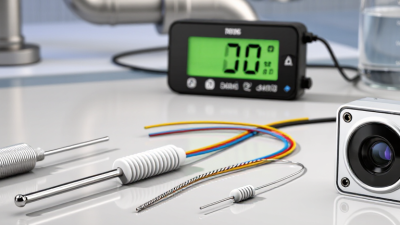
The sensor type must match the application. IEC 60751 supports technical requirements for platinum resistance thermometers, while IEC 60584 covers thermocouple standards. A qualified supplier should explain whether an RTD, thermocouple, thermistor, or infrared sensor fits your temperature range. Ask for accuracy data, calibration records, drift information, probe material, and IP protection details. Small details matter. A stainless-steel probe beside a hot pipe can reveal poor insulation within minutes.

Factory evaluation also requires evidence. Review ISO 9001 certification, laboratory capabilities, sample inspection procedures, and traceable calibration against recognized references. NIST guidance emphasizes traceability and uncertainty when reliable temperature measurements are required. However, certification alone proves little. Check batch consistency, connector quality, response time, minimum order quantity, and replacement support.

The lowest quotation may hide higher costs. I have seen specifications look excellent until samples exposed slow response or unstable cable joints. No checklist is perfect. A careful buyer should compare at least three Chinese manufacturers, test samples under real conditions, and document acceptance limits before ordering. This practical process helps identify the best thermometer sensor for accuracy, durability, compliance, and long-term supply reliability.
How to Choose the Best Thermometer Sensor from China?

What Is a Thermometer Sensor and How Does It Work?

How to Choose the Best Thermometer Sensor from China?

What Is a Thermometer Sensor and How Does It Work?

A thermometer sensor detects temperature and converts it into a measurable electrical signal. The signal then reaches a display, controller, or monitoring system. Thermistors change resistance as temperature changes. Resistance temperature detectors provide stable, accurate readings across wider ranges. Thermocouples create a small voltage when two different metals meet. Each type suits different working conditions.

The probe material also affects performance. Stainless steel handles many industrial environments, while food applications may require smooth, easy-to-clean surfaces. Check the measuring range, accuracy, response time, cable length, and protection rating. A probe reading 100°C in a dry chamber may react differently inside moving liquid. Small details matter.

When sourcing from China, request a complete datasheet and a sample before placing a large order. Ask for calibration records with traceability to recognized standards. Verify whether the stated accuracy includes the electronics, cable, and operating temperature. It often does not. Test several samples at low, middle, and high temperatures. A low-cost sensor may pass one test, then drift after repeated heating. That result deserves investigation, not excuses. Mounting pressure, moisture, and cable movement can also change readings. No sensor is perfect. Allowing space for calibration and replacement makes the final system more dependable.

Which Sensor Type Matches Your Temperature Measurement Needs?

Choosing the best thermometer sensor from China starts with your actual measurement conditions. Temperature range, accuracy, response time, and contact method all matter.

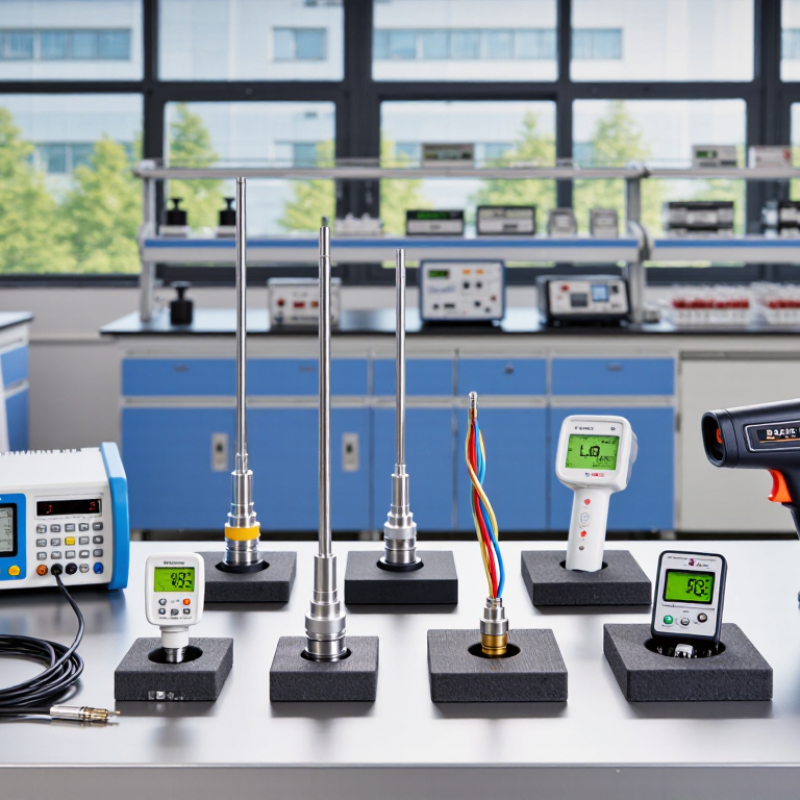
For furnaces, ovens, and engines, thermocouples are practical. They tolerate high temperatures and react quickly. Their readings can drift, so regular calibration is important. RTD sensors fit laboratories, food processing, and industrial tanks. They offer strong accuracy and long-term stability across moderate temperature ranges. Thermistors suit appliances and compact control systems. They respond sensitively within a narrower range. For moving objects or fragile surfaces, infrared sensors measure without contact. Watch the surface. Dust, steam, distance, and emissivity can affect results.

When sourcing from China, request a complete datasheet, wiring diagram, and calibration record. Ask which testing equipment verifies accuracy. A reliable supplier should explain probe materials, tolerance, protection rating, and expected service life. Sample testing is essential before placing a large order. My early mistake was comparing only the listed accuracy. Installation position and cable quality later caused larger errors. I now test sensors under real operating conditions, including vibration, moisture, and repeated heating cycles. A sensor that looks suitable on paper may fail beside a hot pipe or inside a wet chamber. Clear technical communication often matters as much as the sensor type.

How to Compare Accuracy, Range, Response Time, and Stability

How to Choose the Best Thermometer Sensor from China?

Choosing a thermometer sensor from China begins with measurable performance, not a polished datasheet. Compare accuracy at several points across the working range. A sensor rated at ±0.2°C may perform differently near its upper limit. Ask for calibration records with traceable reference equipment. Test samples in an ice bath, warm water, and a controlled dry block. Record the difference at each point. Small details matter.

Range must match the real process, with safety margin on both ends. A sensor designed for room temperatures may become unstable in a heated pipe. Response time also needs a clear test condition. Check whether the stated value uses water, air, or a metal block. These environments transfer heat differently. Faster is not always better. An exposed probe can react quickly but suffer from airflow and vibration.

Stability is often overlooked during supplier selection. Run several samples for days, not only minutes. Watch for drift after repeated heating and cooling cycles. I once trusted an attractive specification, then found a small offset after constant operation. That result changed my inspection process. Ask about sealing, cable quality, insulation, and storage conditions. Review batch consistency, not just one successful sample. Keep raw test data, photographs, and temperature records. A supplier should explain deviations openly, even when the explanation is uncomfortable.

How to Choose the Best Thermometer Sensor from China? - How to Compare Accuracy, Range, Response Time, and Stability

Sensor Technology Typical Measuring Range Typical Accuracy Typical Response Time* Long-Term Stability Main Advantages Key Limitations
Pt100 RTD
Platinum resistance sensor
−200 to 850 °C IEC 60751 Class A: ±(0.15 + 0.002 × |t|) °C 1–20 seconds, depending on probe size and sheath Excellent when properly manufactured High accuracy, good repeatability, strong linearity, suitable for calibration-critical applications More expensive than thermocouples; vibration and insulation resistance can affect performance
Type K Thermocouple
Chromel–Alumel
−200 to 1,260 °C IEC 60584 Class 1: ±1.5 °C or ±0.4% of reading, whichever is greater 0.5–10 seconds, depending on junction and protection tube Good; drift increases with high temperature and contamination Wide temperature range, rugged construction, fast response, low cost Lower accuracy than RTDs; requires cold-junction compensation and correct extension cable
Type T Thermocouple
Copper–Constantan
−200 to 350 °C IEC 60584 Class 1: ±0.5 °C or ±0.004 × |t| °C, whichever is greater 0.5–8 seconds Very good in low- and medium-temperature service Good accuracy at low temperatures; suitable for refrigeration, laboratories, and food processing Limited upper-temperature range; copper conductors may oxidize in harsh environments
NTC Thermistor
Negative temperature coefficient
Typically −50 to 150 °C; selected designs may reach approximately 300 °C About ±0.1 to ±0.5 °C after calibration; uncalibrated accuracy depends strongly on tolerance 0.5–15 seconds Fair to good; aging and thermal cycling must be evaluated Very sensitive, compact, inexpensive, and suitable for battery-powered equipment Nonlinear output; narrower temperature range; accuracy depends on matching, calibration, and electronics
Silicon Semiconductor Sensor
Analog or digital IC sensor
Typically −40 to 125 °C Approximately ±0.3 to ±1.0 °C, depending on the device and temperature range 0.1–2 seconds on a small exposed package Good within the specified operating conditions Easy digital integration, low power consumption, compact size, and no cold-junction compensation Limited temperature range; self-heating, supply variation, and PCB heat paths can affect readings
Infrared Sensor
Non-contact measurement
Commonly −50 to 1,000 °C; model-dependent Typically ±1 °C or ±1% of reading, whichever is greater 0.1–1 second Good when emissivity and optics remain controlled Fast, non-contact, and suitable for moving, inaccessible, or contaminated surfaces Affected by emissivity, distance-to-spot ratio, steam, dust, reflective surfaces, and viewing angle
Selection and verification notes:
  • Accuracy figures are typical reference values, not guaranteed performance for every probe. Confirm the complete probe assembly, transmitter, cable, connector, and display system.
  • Response time depends on probe diameter, sheath material, mounting method, airflow, immersion depth, and whether the stated value is T90 or another response criterion.
  • For purchasing from China, request a calibration certificate traceable to national or international standards, material certificates, insulation-resistance results, and a defined acceptance tolerance.
  • Compare sensors under the same test conditions and require sample testing at low, medium, and high points within the intended operating range.
*Response-time ranges are representative engineering values for properly installed sensors and may vary substantially with construction and application conditions.

How to Evaluate Chinese Thermometer Sensor Manufacturers

Choosing a Chinese thermometer sensor manufacturer requires more than comparing quotations. MarketsandMarkets reported that the global temperature sensor market could reach about USD 11.4 billion by 2028, growing near 7% annually. This expansion attracts capable factories and weak imitators. Request the manufacturer’s production history, core process equipment, and monthly defect data. Do not accept only polished brochures.

Check whether the factory operates an ISO 9001 quality system. For calibration work, ask for ISO/IEC 17025 accreditation and traceability to national measurement standards. RTD suppliers should understand IEC 60751, while thermocouple suppliers should reference IEC 60584. Review sample calibration reports closely. They should show test points, uncertainty, instruments, and environmental conditions. A certificate is not proof. Audit evidence matters more.

Ask for a pre-production sample and test it across your actual temperature range. Compare response time, drift, insulation resistance, and repeatability after thermal cycling. Request raw data, not selected curves. I would also inspect probe welding, sealing, cable strain relief, and batch labeling. These small details often predict field failures. Supplier evaluation is not flawless; factory audits can miss rushed shifts or subcontracted parts. Use quarterly sampling, incoming inspection, and a written corrective-action process. The NIST Engineering Statistics Handbook notes that measurement uncertainty must be considered when judging process results, not hidden behind a single accuracy figure.

What Quality Checks and Certifications Should You Require?

How to Choose the Best Thermometer Sensor from China?

A reliable thermometer sensor starts with a clear test plan. Ask the supplier for accuracy data at your actual temperature range. Check readings at low, middle, and high points. Numbers matter. Request calibration records for each production batch, not only a general factory report. The report should show the instrument used, test conditions, date, and traceable reference standard. Without traceability, a precise-looking number may have little value.

Inspect samples before placing a large order. Compare response time, stability, cable quality, connector fit, and housing finish. Test several units in a calibrated dry block or temperature bath. Repeat each measurement after cooling and heating cycles. Watch for drift. Ask whether the supplier operates under ISO 9001 quality controls. For calibration services, prefer an ISO/IEC 17025 accredited laboratory when available. Accreditation should match the required testing scope.

Certifications depend on the destination market and product use. CE, RoHS, or other declarations may apply, but never accept copied logos as proof. Request current certificates, test reports, and the issuing laboratory’s details. For food, medical, or industrial applications, ask about relevant material and safety requirements. A certificate alone is not enough. I would also define acceptance limits in the purchase contract, including replacement rules for failed sensors. Small gaps remain. Humidity, installation depth, and cable routing can still distort results, even when factory tests look excellent. Ask for pilot samples. Do not guess.