








China Top Thermal Conductivity Measurement Suppliers?

China has become a major source of thermal conductivity measurement equipment, serving laboratories, factories, and research institutions worldwide. Its suppliers offer systems for metals, ceramics, polymers, composites, powders, and insulation materials.

The real question is not simply, “Who sells the lowest-priced instrument?” Performance depends on method, sample geometry, temperature range, calibration quality, and technical support. A guarded hot plate may suit insulation boards. Laser flash analysis may better fit dense solids and high-temperature research. Transient plane source systems can provide rapid screening for small specimens.

David G. Cahill, a widely recognized thermal transport researcher, stated, “The details of the measurement matter.” This principle remains highly relevant when comparing Chinese manufacturers. A polished brochure cannot replace traceable reference materials, repeatability data, and clear uncertainty calculations.

Look closely.

A reliable supplier should explain sensor placement, contact resistance, sample preparation, software control, and maintenance requirements. Ask for test reports using materials similar to yours. For example, a polymer laboratory may need clamping pressure control, while a ceramic manufacturer may require furnace stability above 1,000°C.

Some supplier pages make impressive claims but provide limited evidence. That deserves careful reflection. Even experienced buyers can choose the wrong method when purchasing decisions focus mainly on price.

This guide examines leading China thermal conductivity measurement suppliers through technical capability, product range, calibration practice, customization, certification, delivery, and after-sales service. The goal is practical comparison, not automatic promotion. Supplier rankings may also change as equipment improves, standards evolve, and customer feedback accumulates.
China Top Thermal Conductivity Measurement Suppliers?

What Is Thermal Conductivity Measurement?

Thermal conductivity measurement determines how quickly heat travels through a material. In practical testing, a controlled heat source warms one side, while sensors track the temperature on the other. The result is usually reported in watts per meter-kelvin (W/m·K). A higher value means heat moves more readily. Simple enough, but not always simple.

Engineers select a method according to sample form and expected conductivity. Steady-state testing suits slabs and insulation, while transient methods can examine liquids, powders, and small specimens. Sample thickness, surface flatness, moisture, density, and contact pressure can change the reading. A clean-looking sample may produce unstable data because of a tiny air gap. That detail is easy to miss.

When comparing Chinese thermal conductivity measurement suppliers, buyers should request calibration records, uncertainty data, test standards, and evidence of operator training. A reliable supplier explains sensor placement, environmental control, and acceptable repeatability instead of promising perfect accuracy. Ask for raw data. Also check service support, replacement parts, software records, and measurement range. No instrument is universal. Results still need independent review, especially when materials vary between batches or temperatures.

Key Technologies Used by Chinese Suppliers

Chinese thermal conductivity measurement suppliers are investing in several core technologies. Laser flash analysis measures thermal diffusivity by sending a short energy pulse onto a sample surface. The system then records the temperature rise on the opposite side. Engineers calculate conductivity using diffusivity, density, and specific heat data.

For insulation, ceramics, polymers, and building materials, guarded hot plate systems remain practical. They create a controlled temperature difference across a specimen. Heat flux sensors and calibrated thermocouples track energy transfer through the material. Transient plane source methods are also useful for powders, small samples, and materials with uneven surfaces. The probe must maintain stable contact. Small gaps can distort results.

Vacuum chambers reduce convection during high-temperature testing. Multi-point temperature control improves repeatability near furnaces and heating plates. Chinese suppliers commonly combine these functions with automated software, calibration records, and reference materials. Experienced technicians still inspect sample thickness, surface flatness, and moisture content before testing. These details matter.

No method is perfect. Some suppliers provide impressive specifications but limited uncertainty analysis. Buyers should request raw data, calibration intervals, test standards, and repeatability results. A reliable supplier should explain how the instrument behaves with porous, layered, or anisotropic samples. In daily laboratory work, simple maintenance often matters as much as advanced hardware. Sensor drift happens. Teams should check it.

How to Evaluate Supplier Accuracy and Reliability

China Top Thermal Conductivity Measurement Suppliers?

Supplier accuracy starts with method control, not a polished brochure. Ask whether the laboratory follows ASTM C177, ASTM C518, or ISO 22007-2. These methods suit different materials and temperature ranges. ASTM C177 precision guidance commonly reports repeatability near 2% and reproducibility near 5% for suitable test conditions. Treat those figures as benchmarks, not promises.

Request a recent ISO/IEC 17025 accreditation scope, calibration certificates, and raw measurement records. The uncertainty statement should show coverage factor k=2, usually representing approximately 95% confidence. NIST’s uncertainty guidance stresses traceability, repeatability, and complete uncertainty budgets.

A reliable supplier should identify contact resistance, specimen thickness, moisture, density, and temperature stability. Ask for round-robin or certified-reference-material results. Numbers should match the method.

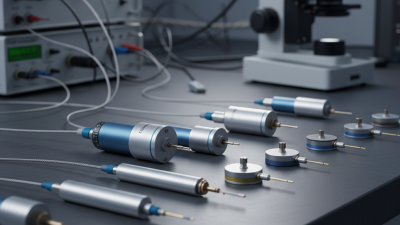
See the test bench.

For practical evaluation, send identical specimens to two laboratories and compare bias, not only repeatability. A result of 1.00 W/m·K with ±0.03 uncertainty is more useful than unsupported “high accuracy.”

Check whether operators record surface preparation and clamping pressure. Small gaps can distort readings, especially in porous insulation.

Some suppliers provide impressive graphs but omit failed tests. That omission deserves questions. My own preference is a supplier that reports limitations openly, even when the result looks less attractive.

Accuracy claims without raw data remain incomplete.

Leading Applications Across Industrial Sectors

China Top Thermal Conductivity Measurement Suppliers?

Thermal conductivity measurement now supports decisions far beyond laboratory testing. In electric vehicles, engineers test battery separators, cooling plates, and thermal interface materials. The International Energy Agency reported more than 14 million electric cars were sold globally in 2023. That growth increases demand for reliable heat-flow data. Small measurement errors can distort battery safety margins.

Building materials form another major application. The U.S. Department of Energy reports that buildings consume roughly 40% of total U.S. energy use. Insulation producers therefore measure conductivity in panels, foams, glass fiber, and lightweight composites. A controlled specimen, stable temperature, and repeatable contact pressure matter greatly. Field performance can still differ.

Industrial furnaces and power equipment require higher-temperature testing. Aerospace manufacturers examine ceramics, coatings, and thermal barriers under severe gradients. Semiconductor production also depends on accurate wafer and package measurements. ASTM and ISO test methods provide useful foundations, including guarded heat-flow and transient techniques. However, a standard method does not guarantee perfect results. Surface roughness, moisture, and calibration drift remain practical concerns. That part is often underestimated.

Reliable Chinese suppliers typically support custom fixtures, temperature ranges, and data software for these sectors. Buyers should request uncertainty budgets, calibration records, and application-specific reference samples. The best instrument is not always the fastest one. It is the one that reproduces real operating conditions.

Factors to Consider When Selecting a Supplier

Choosing a top thermal conductivity measurement supplier in China requires more than comparing prices. The supplier should understand your material, test range, and required accuracy. A laboratory testing plastics may need different equipment from one testing ceramics or insulation panels. Ask which methods they support, such as steady-state or transient testing. Request calibration certificates, uncertainty data, and recent test reports. Ask for proof.

Equipment quality matters, but application knowledge matters more. Check whether engineers can explain sample preparation, contact resistance, temperature control, and data correction. These details can change the result noticeably. A reliable supplier should provide clear operating instructions and practical training. If possible, send a typical sample before placing a large order. Review the report format, repeatability, and response time. Do not guess.

Supplier reliability also depends on service after delivery. Confirm spare-part availability, software support, repair procedures, and warranty terms in writing. Visit the facility or request a live video inspection when practical. Look for traceable records, trained technicians, and organized production areas. A polished brochure proves little. A transparent audit reveals more. Delivery promises should include installation and commissioning time, not only shipping dates. One weakness remains easy to miss: even accurate instruments can produce poor data when operators lack experience. Choose a supplier willing to discuss that risk openly, rather than promising perfect results.

China Top Thermal Conductivity Measurement Suppliers? — Factors to Consider When Selecting a Supplier

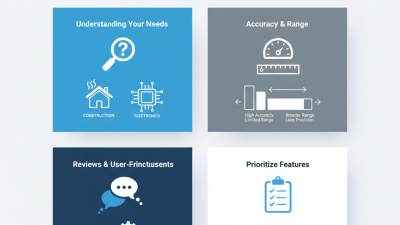
The chart presents a practical evaluation weighting for thermal conductivity measurement suppliers. Measurement accuracy, method compatibility, calibration traceability, temperature range, and service capability are key factors when comparing suppliers without relying on brand names.