








Choosing the right heat flux meter now requires more than comparing price, range, and display features. Buildings consume about 30% of global final energy, according to the 2023 Global Status Report for Buildings and Construction by UNEP. Heat-transfer measurement therefore supports insulation testing, façade studies, furnace monitoring, and industrial efficiency projects.
A reliable meter should show stable readings on uneven surfaces. It should also provide traceable calibration, suitable sensor thickness, practical data logging, and clear uncertainty information. ASTM C518 and ISO 9869-1 offer useful reference points for thermal-performance testing, although they do not make every instrument equally suitable. Field conditions can be messy. Dust, curved metal, changing contact pressure, and sudden temperature differences may distort results.
Dr. Frank P. Incropera defines the principle clearly: “Heat transfer is thermal energy in transit due to a spatial temperature difference.” That simple statement explains why sensor placement matters. Even a premium instrument can produce weak evidence when the surface is poorly prepared.
This guide compares ten heat flux meter options for global buyers. The evaluation considers measurement range, response time, calibration support, sensor durability, software, and regional service access. It also considers published specifications against practical use. Not every claim is equally transparent. Buyers should verify certificates, operating limits, and replacement-sensor availability before purchase. Small details matter.
The selection is designed for engineers, energy auditors, researchers, and quality teams. It is not a universal ranking. A laboratory instrument may fail in a construction site. A compact meter may be ideal for inspections but limited for long-term monitoring. The best choice depends on the surface, temperature range, accuracy target, and evidence required.
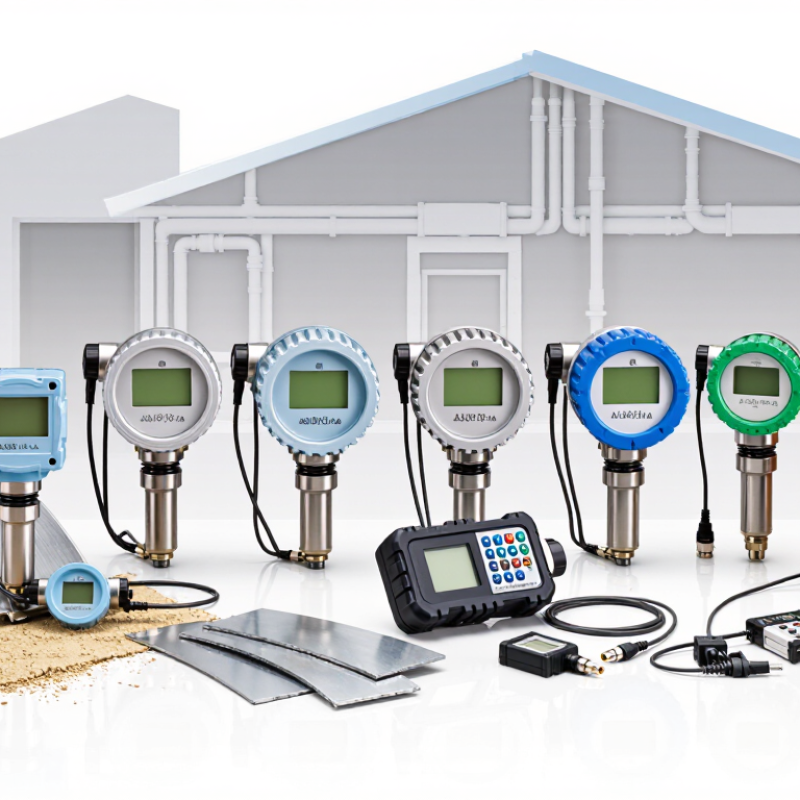
Heat flux meters quantify thermal energy passing through a surface, usually in watts per square metre. Their basic principle follows Fourier’s law: heat moves from warmer regions toward cooler ones. A sensor converts this flow into an electrical signal, commonly through thermopile voltage or temperature-gradient measurement.
The measurement surface matters. A sensor placed over an air gap, wet patch, or uneven coating can produce misleading results. The IEA’s Buildings 2023 report states that buildings consume about 30% of global energy and create roughly 26% of energy-related emissions. This makes reliable envelope testing commercially important, not merely academic. For global buyers, compare sensitivity, response time, operating temperature, calibration traceability, and surface compatibility.
During field work, technicians should record ambient temperature, wind conditions, mounting pressure, and sensor orientation. ISO 9869-1 recommends in-situ methods for evaluating building thermal resistance, but stable conditions remain essential.
A meter may show 18 W/m², while a nearby thermal bridge carries much more heat. Small installation errors matter.
A useful uncertainty budget includes sensor accuracy, contact resistance, data logging, and environmental drift. It is easy to trust a neat digital value too quickly. The IPCC’s Sixth Assessment Report identifies building efficiency as a major mitigation opportunity, yet measurement quality still varies between sites. No instrument is perfectly neutral. Buyers should request calibration records and test evidence, then question results that look unusually clean.
Choosing among the top heat flux meters requires more than comparing advertised accuracy. Check the measurement uncertainty, calibration method, and operating temperature range. A meter rated at ±3% may perform differently in a dusty furnace or under uneven surface contact. I have found that stable mounting often matters as much as the sensor specification. Small gaps can distort readings. That matters.
Sensor design should match the application. Thermopile sensors suit many steady thermal measurements, while thin-film sensors can respond faster to changing heat loads. Confirm the expected flux range before purchase. A narrow-range sensor may deliver better resolution, but it can saturate during a sudden thermal spike. A very wide range sounds useful, yet low-level readings may become less clear. Response time deserves attention too.
Tips: Request calibration records and ask whether traceable standards were used. Compare analog outputs, USB, Ethernet, or wireless interfaces with your existing equipment. Check sampling rate, file formats, software access, and electrical isolation. Test the meter beside a reference instrument before field deployment. Do not rely on a single reading. Repeat measurements at several points, especially where insulation, airflow, or surface texture changes. Some specifications remain incomplete, so ask technical questions before treating a datasheet as final evidence.
The chart compares representative non-branded heat flux meter categories using typical full-scale accuracy and maximum measurement range. Actual performance depends on calibration, operating temperature, sensor size, installation, and signal conditioning.
Thermopile and thin-film sensors are commonly selected for low-to-medium heat flux measurements, while Gardon, Schmidt-Boelter, water-cooled, ceramic, and calorimetric sensors are used for higher thermal loads. Common data interfaces include analog millivolt output, USB, RS-485, Ethernet, and wireless links. Lower accuracy percentages indicate better nominal accuracy; higher range values support more demanding thermal environments.
Heat flux meters serve different global applications, so one specification rarely fits every site.
For building envelope surveys, choose a thin sensor with stable calibration and low thermal resistance. It can reveal heat loss through walls, roofs, windows, and insulated doors. In HVAC testing, fast response helps compare duct insulation and surface temperatures. Refrigeration engineers may need sensors that tolerate condensation and repeated cold cycles. Field measurements should include ambient temperature, surface condition, and sensor orientation.
Industrial furnaces require high-temperature probes with protective layers and reliable data logging. Solar thermal researchers measure absorbed energy on collectors and façades. Battery laboratories monitor heat released during charging, cycling, or controlled abuse tests. In aerospace development, lightweight sensors reduce interference with airflow and composite panels. Soil and greenhouse studies use small probes to examine ground heat movement near roots. Marine and pipeline projects need sealed equipment that resists moisture, vibration, and salt exposure.
I have seen accurate sensors produce poor results after careless mounting. Adhesive thickness, air gaps, and uneven surfaces can distort readings. No meter is perfect. Calibration should match the expected heat-flux range, temperature range, and installation method. ISO or ASTM-based procedures improve comparability between laboratories and field teams. Still, local conditions matter. A sensor suitable for a dry factory may fail beside a humid coastal wall. Check uncertainty, cable length, connector protection, and software compatibility before purchase. Even simple field notes can prevent expensive misinterpretation.
Selecting among the top 10 heat flux meters requires more than comparing measuring ranges. Global buyers should check applicable standards, sensor response, uncertainty, and documented test methods. ISO 8301 and ASTM C518 may guide thermal-resistance testing, while other applications require different procedures. Confirm the standard before ordering. A familiar standard may not fit every material.
Calibration should be traceable to national or international measurement systems. Request the calibration date, reference equipment, uncertainty statement, and recommended recalibration interval. Check whether the certificate matches the operating temperature and flux range. Calibration is not permanent. Transport vibration, moisture, and repeated heating can change performance. This detail is often underestimated.
Installation directly affects results. Keep the sensor surface clean, flat, and fully bonded to the test area. Avoid air gaps, excessive adhesive, and cable contact with hot surfaces. Record contact pressure, orientation, ambient temperature, and warm-up time. Support also matters for global projects. Look for clear manuals, responsive technical assistance, replacement sensors, and training in your working language. Some suppliers promise fast help, but response times should be written into the agreement. A practical trial can reveal weaknesses that a polished datasheet hides. Mistakes still happen. Good documentation makes them easier to find and correct.
For global buyers, comparing ten heat flux meters should begin with measurement needs, not headline price. Define the expected heat-flow range, sensor size, surface temperature, and installation method. A building envelope project may need thin sensors, while furnace testing demands higher thermal resistance and temperature tolerance. Check stated accuracy, response time, calibration intervals, and uncertainty data. Ask for calibration certificates linked to recognized laboratory standards. Small details matter.
Request pricing in the same format from every supplier. Include the meter, sensors, cables, software, calibration, packaging, freight, insurance, duties, and local taxes. The cheapest quotation often excludes essential accessories. Calculate the landed cost. Also confirm currency, payment terms, production lead time, spare sensor availability, and warranty coverage. For sourcing, evaluate technical support across time zones and the clarity of manuals. A supplier that answers specification questions precisely is easier to audit later. Verify serial-number traceability and replacement procedures before ordering.
Before approval, test a sample under realistic conditions. Compare readings against a reference instrument or a controlled heat source. Document drift after repeated mounting and removal. I once focused too heavily on accuracy figures and overlooked cable flexibility; field installation became slower than planned. That mistake remains useful. A selection checklist should include electromagnetic compatibility, data export formats, enclosure protection, operating temperature, and regional compliance documents. Do not assume every claimed specification applies to the complete system. Request written confirmation.
| No. | Meter Configuration | Typical Heat-Flux Range | Typical Accuracy | Response Time | Recommended Applications | Output / Interface | Indicative Unit Price (USD) | Typical Lead Time | International Sourcing Checklist |
|---|---|---|---|---|---|---|---|---|---|
| 1 | General-Purpose Thermopile Sensor | 0.1–100 kW/m² | Typically ±5% of reading | 0.5–5 seconds | Laboratory testing, furnace studies, insulation research, industrial process monitoring | Low-level millivolt signal; optional signal conditioner or data logger | $180–$650 | 2–8 weeks | Confirm calibration curve, sensor active area, cable length, mounting method, and calibration certificate traceability. |
| 2 | Building-Envelope Heat Flux Plate | 0–2 kW/m² | Typically ±3–5% of reading | 10–60 seconds | Walls, roofs, windows, thermal bridges, energy-efficiency audits | Millivolt output; compatible with thermocouple or voltage data acquisition systems | $220–$700 | 3–6 weeks | Check plate thickness, thermal resistance, surface attachment method, weather resistance, and low-flux stability. |
| 3 | High-Heat-Flux Water-Cooled Sensor | 10–1,000 kW/m² | Typically ±5–10% of reading | 10–100 milliseconds | Combustion research, burners, plasma systems, high-temperature process equipment | Millivolt output; requires cooling circuit and calibrated readout | $900–$3,500 | 6–12 weeks | Verify cooling flow rate, maximum inlet temperature, pressure rating, seals, spare parts, and safety documentation. |
| 4 | Thin-Film Fast-Response Heat Flux Gauge | 1–500 kW/m² | Typically ±5–8% of reading | Less than 1 millisecond to 20 milliseconds | Transient flames, engines, aerodynamic heating, pulsed thermal events | High-bandwidth millivolt signal; shielded cable recommended | $800–$3,000 | 6–14 weeks | Confirm bandwidth, sampling requirements, sensor survivability, installation orientation, and electromagnetic shielding. |
| 5 | Surface-Mounted Foil Heat Flux Sensor | 0.5–200 kW/m² | Typically ±5–10% of reading | 5–200 milliseconds | Curved surfaces, pipework, vehicle bodies, thermal equipment, field surveys | Millivolt or conditioned voltage output | $350–$1,400 | 4–10 weeks | Review bend radius, adhesive or clamp installation, maximum surface temperature, cable flexibility, and replacement availability. |
| 6 | High-Temperature Ceramic Heat Flux Meter | 1–300 kW/m² | Typically ±7–12% of reading | 0.1–2 seconds | Kilns, furnaces, refractory testing, heat-treatment equipment | Millivolt output; high-temperature cable assembly | $600–$2,200 | 6–12 weeks | Confirm continuous and short-term temperature limits, thermal shock resistance, mounting hardware, and cable insulation rating. |
| 7 | Multi-Channel Heat Flux Data Logger Kit | Sensor-dependent; commonly 0.01–100 kW/m² | Typically ±0.5% of full scale plus sensor error | 0.1–10 seconds, configurable | Research facilities, building diagnostics, multiple test points, long-duration monitoring | 4–32 analog channels; USB, Ethernet, or removable storage options | $900–$4,500 excluding sensors | 3–10 weeks | Check channel count, input range, cold-junction compensation, software language, export formats, and power-supply compatibility. |
| 8 | Portable Heat Flux Meter with Display | 0.01–20 kW/m² | Typically ±5% of reading | 1–10 seconds | On-site inspections, insulation checks, laboratory spot measurements, maintenance work | Digital display; internal memory, USB, or Bluetooth may be available | $450–$1,800 | 2–8 weeks | Verify battery type, display units, data export, operating temperature, local charger requirements, and field recalibration options. |
| 9 | Radiant Heat Flux Transducer | 1–200 kW/m² | Typically ±5–10% of reading | 0.1–5 seconds | Fire safety testing, radiant panels, solar-thermal research, material exposure tests | Millivolt output; optional water cooling, shutter, or protective window | $700–$2,800 | 5–12 weeks | Specify radiative versus convective measurement needs, field of view, window transmission, cooling, and calibration radiation source. |
| 10 | Custom Embedded Heat Flux Probe | Application-specific; commonly 0.1–1,000 kW/m² | Typically ±5–15% of reading | 10 milliseconds to 60 seconds | Engine components, battery systems, heat exchangers, test rigs, harsh industrial environments | Configured millivolt, voltage, current-loop, or digital output | $1,000–$6,000+ | 8–20 weeks | Provide drawings, thermal limits, pressure and vibration data, sealing requirements, connector standards, MOQ, and acceptance-test criteria. |