How to Choose the Right Conductivity Sensor for Your Needs?
Choosing the right conductivity sensor is essential for accurate measurement and analysis in various applications. Conductivity sensors are crucial tools in fields like water quality monitoring, industrial processing, and environmental research. They help determine the ionic content of liquids, which affects many processes.
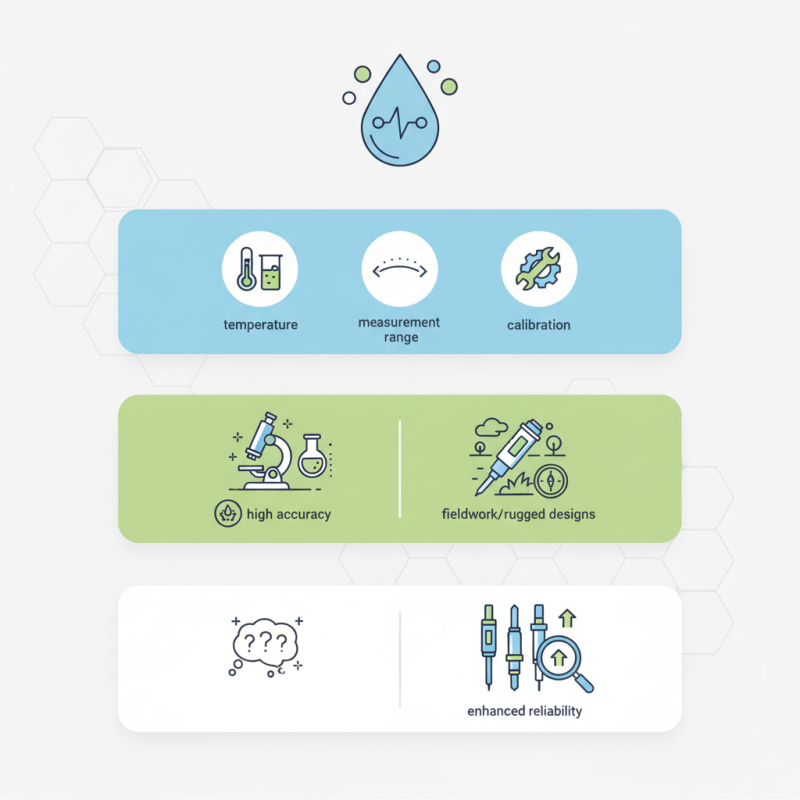
When selecting a conductivity sensor, consider factors such as measurement range, temperature compatibility, and calibration requirements. Different applications may demand specific features. For instance, laboratory settings might prioritize high accuracy, while fieldwork could require rugged designs.
However, not every sensor suits every need. It’s important to reflect on your unique requirements. Some may find sensors complicated or difficult to maintain. Evaluating multiple options is wise. Researching different brands can lead to better choices. Ultimately, investing in the right conductivity sensor will enhance reliability and performance in your specific applications.
Understanding Conductivity Sensors: Types and Applications
Conductivity sensors play an essential role in various industries, from water treatment to pharmaceuticals. These sensors measure the electrical conductivity of a solution, providing insights into its ionic content. Different types of conductivity sensors, like contact and non-contact sensors, serve unique applications. According to industry reports, the global market for conductivity sensors is projected to grow at a CAGR of 5.6% through 2027. This growth highlights the increasing reliance on precise monitoring and control in industrial processes.
Contact sensors, which utilize electrodes, are commonly used in wastewater treatment. They offer real-time data but may face challenges with fouling. Non-contact sensors, on the other hand, provide measurements without direct contact. However, these can be more costly and less widely implemented. The choice between these sensors hinges on specific needs, such as sensitivity and environmental conditions. It's crucial to consider accuracy and maintenance requirements when selecting a sensor type.
Technological advancements enhance the capabilities of conductivity sensors. Improved materials increase durability and reduce interference. However, potential issues, like sensor drift and calibration, require attention. Understanding these nuances can ensure better decision-making when choosing a conductivity sensor for your application.
Key Factors to Consider Before Choosing a Conductivity Sensor
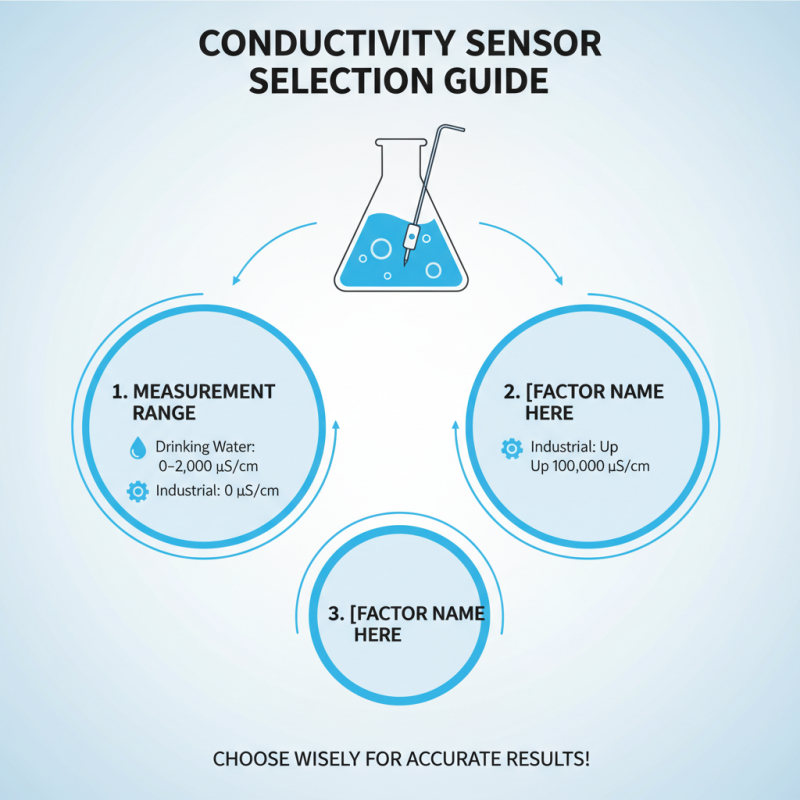
When selecting the right conductivity sensor, several key factors come into play. The first consideration is the measurement range. Different applications require specific ranges based on the conductivity levels of the fluids. For instance, a sensor that operates within 0 to 2,000 µS/cm works well for drinking water, while industrial applications may need sensors capable of handling up to 100,000 µS/cm.
Another important factor is the sensor's material. Common materials include glass and plastic, with each offering benefits and drawbacks. Glass sensors are suitable for high-temperature applications, while plastic options are more versatile and resistant to corrosive substances. A report by the Omega Engineering indicates that the choice of material can significantly impact sensor longevity and accuracy.
Tips: Always consider the environment where the sensor will be used. Harsh conditions can affect sensor performance. Regular maintenance may be required for optimal operation.
Sensor calibration is another critical aspect. Proper calibration ensures accuracy in readings. Manufacturers recommend calibration at regular intervals to maintain performance. A study from the International Journal of Environmental Science shows that uncalibrated sensors can lead to errors as high as 20%.
Carefully assessing these factors will ensure that you select the best conductivity sensor for your needs.
Analyzing Accuracy and Range in Conductivity Measurements
When selecting a conductivity sensor,
accuracy and measurement range play pivotal roles.
Accurate conductivity measurements are crucial in various industries, such as
water treatment, chemical manufacturing, and food processing.
A recent industry report indicates that sensors with a measurement range of
0 to 200 mS/cm are essential for typical applications,
especially in waste management. These sensors ensure that you consistently monitor
water quality while providing reliable data.
Consider the sensor's accuracy specifications. Many models offer an accuracy of
±0.5% of reading, which is sufficient for general applications.
However, high-precision tasks may require those with an accuracy of
±0.1%. A report by the International Society of Automation
emphasizes that any variation beyond these specifications can lead to
significant financial losses, especially in regulated environments.
It's worth noting that high-end sensors often come with
higher costs, and their performance may not significantly exceed
mid-range models in all scenarios. An in-depth analysis of user needs can illuminate
whether the investment in more accurate technology is justified. A balance must be struck
between budget constraints and the actual requirements
of specific applications.
Evaluating Cost and Maintenance Requirements for Sensors
When choosing a conductivity sensor, cost and maintenance are crucial factors. The initial expense of a sensor can vary widely. Some may offer advanced features while others focus on affordability. It's essential to assess your budget before making a choice. A higher initial cost might lead to better long-term performance. However, a cheaper option may incur unexpected maintenance costs down the line.
Maintenance should also factor into your decision. Certain sensors require regular calibration and cleaning, which can be time-consuming. Consider the ongoing maintenance requirements when evaluating your options. Some sensors offer user-friendly designs that simplify upkeep. Others might need specialist equipment or knowledge, increasing operational time and labor costs.
It's also wise to think about the environment where the sensor will operate. Sensors exposed to harsh conditions may need more frequent checks. This reality might challenge your initial assumptions about the right choice. Evaluating these aspects carefully can lead to a sound investment in the right conductivity sensor.
Selecting Compatible Technologies and Features for Your Setup
When selecting a conductivity sensor, the technology and features must align with your specific application. The market offers various sensor types, including contact and non-contact options. Contact sensors are widely used in wastewater treatment. Reports indicate that they provide accurate readings under challenging conditions. However, they may require regular maintenance to ensure optimal performance.
Compatibility with existing systems is also crucial. Many industries now employ digital communication protocols for data sharing. According to recent industry surveys, around 70% of professionals prioritize seamless integration. This consideration can eliminate potential downtime during installation. Opting for sensors that support standard protocols can save time and reduce technical challenges.
Another feature to consider is the sensor's range and accuracy. Different applications may require distinct measurement ranges. For instance, higher precision may be vital in lab environments. Industry standards recommend a tolerance of less than 1% in critical applications. Therefore, understanding the specific requirements of your setup is essential to select the best sensor. As technology evolves, remaining adaptable is key to future-proofing your operations.
How to Choose the Right Conductivity Sensor for Your Needs?
| Parameter |
Description |
Recommendation |
| Measurement Range |
The range of conductivity values the sensor can measure. |
Choose a sensor that covers your expected conductivity range (e.g., 0-2000 µS/cm). |
| Accuracy |
The degree of closeness of the measured value to the actual value. |
Select a sensor with at least ±1% accuracy for reliable results. |
| Temperature Compensation |
Ability of the sensor to correct for temperature variations. |
Opt for a sensor with automatic temperature compensation for better performance. |
| Material Compatibility |
The materials used in the sensor construction. |
Ensure compatibility with the liquids being measured (e.g., polypropylene for corrosive liquids). |
| Output Type |
The signal output format of the sensor (e.g., analog, digital). |
Choose based on your data acquisition system (e.g., 4-20 mA for analog). |
| Power Supply Requirements |
The power needed to operate the sensor. |
Verify it matches your existing system voltage (e.g., 24V or USB powered). |
| Installation Type |
How the sensor can be installed (inline, submersible, etc.). |
Select based on your system’s space and configuration constraints. |