







7 Best Pyranometer Sensors for Global Solar Projects

Choosing the right pyranometer sensor can influence an entire solar project’s performance assessment. Reliable irradiance data supports yield forecasting, plant monitoring, warranty checks, and long-term asset management. Yet global projects rarely operate under identical conditions. A sensor proven on a dry desert site may behave differently beside a humid coastline or at a high-altitude plateau.

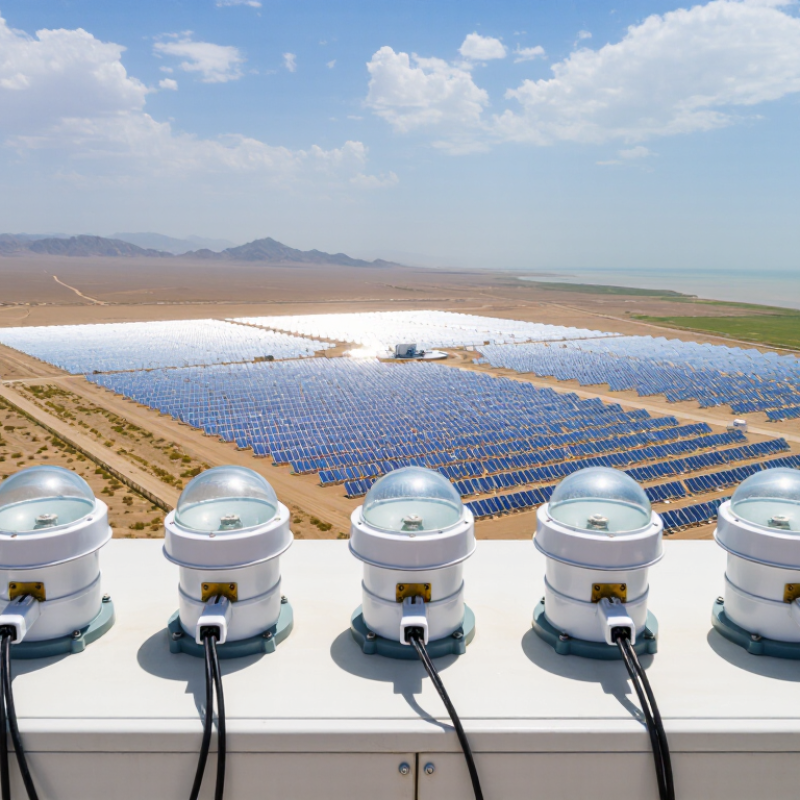
This guide examines seven leading pyranometer sensors used in utility-scale, commercial, and research applications. The comparison considers measurement accuracy, spectral response, thermal stability, response time, calibration practice, maintenance needs, and system compatibility. These details matter in the field. Dust can cover a glass dome within days. Salt air can attack exposed hardware. Rapid cloud movement can reveal weaknesses in a slow-response instrument.

No sensor is perfect.

Experienced engineers should also review installation height, shading, leveling, cable quality, and data-logger settings. A premium instrument can still produce unreliable results when mounted poorly. The best choice depends on project size, climate, budget, required uncertainty, and local service support. Manufacturer specifications provide a useful starting point, but field experience often exposes practical limitations.

The selected models are discussed with an evidence-based approach. Their strengths and trade-offs are considered rather than exaggerated. Some projects may need research-grade accuracy, while others may value simple deployment and lower maintenance. That distinction is easy to miss. Careful sensor selection helps project teams build more trustworthy solar datasets and make stronger technical decisions throughout the asset’s operating life.
7 Best Pyranometer Sensors for Global Solar Projects

Global Solar Irradiance Standards: ISO 9060:2018 and IEC 61724-1

Global solar projects need irradiance measurements that remain comparable across seasons, sites, and equipment. ISO 9060:2018 classifies pyranometers by performance. Class A supports the most demanding measurements. Class B and Class C can suit less critical monitoring. The correct class depends on uncertainty, budget, and project purpose.

For a seven-sensor shortlist, compare thermopile models by response time, temperature dependence, directional response, and spectral behavior. Check whether heating or ventilation is available. These features reduce frost, dew, and soiling effects. They also create extra maintenance needs. Real sites are rarely perfect.

IEC 61724-1 adds the monitoring framework. It addresses sensor placement, data intervals, calibration, shading, and quality checks. A high-class instrument cannot rescue poor installation. Mount it level, keep nearby obstructions distant, and record cleaning events. Cross-check readings against clear-sky conditions and neighboring sensors when possible. Small errors accumulate.

Field teams should document calibration dates and uncertainty values. A damaged cable can imitate weak sunlight. That mistake is surprisingly common. Use automated alarms for flatlined data, sudden jumps, and nighttime leakage. Standards guide the measurement, but judgment still matters. Some projects specify Class A sensors, then neglect cleaning. That choice deserves review. Weather, dust, access, and maintenance skill should influence the final selection.

7 Best Pyranometer Sensors for Global Solar Projects

Global Solar Irradiance Standards: ISO 9060:2018 and IEC 61724-1

Comparison of representative pyranometer sensor configurations for utility-scale, commercial, research, and remote solar projects
Rank Sensor Type Measurement Principle ISO 9060:2018 Target Class Typical Spectral Range Typical Response Time Typical Measurement Uncertainty Recommended IEC 61724-1 Use Main Strength
1 Ventilated research thermopile Thermopile with precision glass dome, active ventilation, and optional heating Class A; spectrally flat, fast-response configuration Approximately 285–2,800 nm Typically less than 5 seconds for 95% response Approximately 1–3% for daily or annual energy assessment when correctly installed and maintained Class A reference stations and high-accuracy performance monitoring Lowest influence from dew, frost, dust, and thermal offsets
2 Secondary-standard thermopile Precision thermopile with dual-dome optical shielding Class A Approximately 285–2,800 nm Typically 5–15 seconds for 95% response Approximately 2–5% with regular calibration and site maintenance Class A utility-scale resource assessment and long-term plant monitoring Broad solar-spectrum response and strong long-term stability
3 High-quality unventilated thermopile Thermopile detector with single or dual glass dome Class A or Class B Approximately 285–2,800 nm Typically 10–25 seconds for 95% response Approximately 3–6% under clean and well-maintained conditions Class A or B fixed-tilt and tracker monitoring Good balance between accuracy, cost, and installation simplicity
4 Fast-response thermopile Low-thermal-mass thermopile designed for rapid irradiance changes Class A or Class B, subject to full compliance testing Approximately 300–2,800 nm Typically 1–5 seconds for 95% response Approximately 3–6% depending on calibration and environmental conditions High-frequency monitoring, tracker control, and cloud-edge analysis Captures fast irradiance transitions with reduced signal lag
5 Compact silicon reference-cell sensor Calibrated silicon photodiode or reference cell with optical filter and temperature compensation Not generally equivalent to a spectrally flat Class A pyranometer Approximately 400–1,100 nm, depending on filter design Typically less than 1 second Approximately 2–5% for silicon-matched PV applications Class B or C PV performance monitoring and inverter-level comparison Fast response, low power demand, and compact installation
6 Digital smart thermopile Thermopile with integrated signal conditioning, temperature correction, diagnostics, and digital output Class A or Class B, depending on verified test results Approximately 285–2,800 nm Typically 5–20 seconds for 95% response Approximately 3–6% with valid calibration and correct configuration Distributed Class B monitoring, remote sites, and automated data acquisition Simplified integration, data diagnostics, and lower analog wiring risk
7 Rugged field thermopile Weather-resistant thermopile with robust housing and low-maintenance enclosure Class B or Class C Approximately 300–2,800 nm Typically 10–30 seconds for 95% response Approximately 4–8% depending on exposure, cleaning, and calibration interval Class B or C monitoring in harsh, remote, or cost-sensitive locations Durability and dependable operation in difficult outdoor environments
Standards note: ISO 9060:2018 classifies pyranometer performance using response time, zero offsets, non-linearity, directional response, spectral error, temperature response, and tilt response. IEC 61724-1 defines monitoring requirements and monitoring classes for photovoltaic systems. A sensor should be selected according to its documented conformity test results, calibration uncertainty, installation geometry, cleaning plan, and site climate.

Core Selection Metrics: ±2% Accuracy, 280–3,000 nm Spectral Response

Selecting among the seven best pyranometer sensors starts with measurement integrity, not a glossy specification sheet. A trusted model should maintain accuracy within ±2% under defined calibration conditions. Ask whether that tolerance covers daily totals, instantaneous readings, or both. Those figures are not interchangeable.

Spectral response from 280 to 3,000 nm matters across global solar projects. It captures ultraviolet, visible, and near-infrared radiation reaching the monitoring plane. This range helps compare sites with different humidity, altitude, dust, and cloud patterns. A narrow response may miss energy outside the visible band. That weakness can distort yield assessments.

I have seen field readings drift after dust settled around the sensing dome. Regular cleaning, leveling checks, and documented calibration are essential. Look for low temperature dependence, strong cosine response, and stable performance during rapid cloud changes. A rugged enclosure also matters in coastal salt, desert heat, and freezing conditions. Small details matter.

One practical warning remains. A ±2% claim may depend on perfect alignment and laboratory testing. Real sites are less forgiving. Review uncertainty budgets, calibration intervals, heater power, cable length, and data logger compatibility before approval. A sensor with slightly lower headline performance may produce better long-term data when maintenance access is limited. That trade-off deserves scrutiny.

Seven Leading Pyranometers Compared by Class, Range, and Response Time

7 Best Pyranometer Sensors for Global Solar Projects

Seven leading pyranometers can be compared clearly by class, range, and response time. ISO 9060:2018 divides radiometers into Class A, B, and C. Class A suits high-accuracy resource assessment and performance verification. Class B fits dependable monitoring with moderate cost. Class C serves basic operational checks. Typical thermopile sensors cover approximately 285–3,000 nanometers and measure about 0–2,000 W/m². That range captures most ground-level global irradiance, including bright midday conditions.

Response time changes the usefulness of each class. Class A instruments commonly target a 95% response within one second. Class B may reach five seconds, while Class C can approach fifteen seconds. These figures align with the precision principles described in the World Meteorological Organization’s Guide to Instruments and Methods of Observation. Fast response matters when broken clouds create sharp irradiance ramps. A slow sensor can soften those peaks and distort inverter or tracker analysis. Small errors become visible.

The International Renewable Energy Agency reported more than 1.4 terawatts of global solar capacity by the end of 2023. This expansion increases demand for consistent field measurements. For a desert plant, dust resistance and stable calibration may matter more than extreme speed. In a tropical project, humidity protection and rapid cloud response deserve closer attention. Some specifications look impressive on paper. Field reality is messier. A practical review should check calibration drift, cable losses, leveling, and heating effects before choosing among seven candidates.

Sensor Suitability Across Utility-Scale, Rooftop, and Off-Grid Projects

Utility-scale solar plants need pyranometer sensors that remain stable across wide, harsh sites. The seven strongest choices include Class A thermopile sensors, Class B thermopile sensors, silicon reference-cell sensors, heated models, ventilated models, compact digital sensors, and redundant monitoring pairs. Class A units suit bankable performance testing. They support reliable irradiance data during long-term yield assessments. Class B units reduce cost for routine operational monitoring. Silicon sensors respond quickly, but their spectral response can affect comparisons with reference measurements.

Large arrays benefit from heated or ventilated instruments. Dust, dew, and frost can distort a morning reading. A heated sensor clears moisture, while ventilation reduces temperature-related drift. Mounting height also matters. A shaded cable or loose leveling screw can quietly damage data quality. Field teams should inspect the bubble level, cable seals, and cleaning log during every scheduled visit. Small errors accumulate.

Rooftop projects usually need compact sensors with simple digital outputs. Limited roof space makes installation practical, not theoretical. A sensor beside a parapet may read less sunlight than the panels receive. Off-grid systems require low-power designs, strong weather resistance, and easy replacement. Redundant pairs are valuable where maintenance visits take days. They can reveal sensor failure before battery decisions become unreliable. Still, redundancy adds cost, wiring, and another calibration record. No sensor fits every project. Site latitude, soiling, snow, tilt, budget, and measurement purpose should shape the final choice. One overlooked issue remains common: teams often select the instrument first and the maintenance plan later.

7 Best Pyranometer Sensors for Global Solar Projects

Sensor suitability across utility-scale, rooftop, and off-grid solar projects

The 0–100 suitability index is based on typical sensor characteristics, including measurement accuracy, response speed, spectral behavior, installation complexity, maintenance requirements, and cost. Class A thermopile sensors are generally preferred for high-accuracy utility monitoring, while silicon and reference-cell sensors are practical for fast-response rooftop and off-grid applications.

Lifecycle Evaluation: Calibration Intervals, IP Ratings, and Total Cost of Ownership

Selecting among the seven best pyranometer sensors requires more than comparing purchase prices. Lifecycle performance matters. A field sensor faces dust, humidity, salt, insects, and repeated thermal cycles. The WMO Guide to Instruments and Methods of Observation, WMO-No. 8, recommends calibration planning based on instrument class, exposure, and drift history. A two-year interval is a useful starting point, not a universal rule. High-value reference stations may need annual verification.

IEC 61724-1:2021 also emphasizes traceable calibration and routine data-quality checks. A sensor with an IP65 or IP66 enclosure can resist water and dust, but the rating does not guarantee stable readings after years outdoors. Check cable glands, desiccants, connector corrosion, and mounting level during every site visit. Small alignment errors can quietly distort long-term irradiance data. That is easy to underestimate.

Total cost of ownership includes calibration travel, cleaning labor, spare cables, downtime, and rejected data. IEA PVPS Task 13 reports that soiling losses commonly reach several percent annually, with harsher sites performing worse. A reliable sensor can therefore protect revenue forecasts, not just improve a dashboard. Still, the cheapest calibration plan may fail when logistics are difficult. Remote projects need local inspection capacity, documented drift limits, and spare instruments. Some assumptions will be wrong. Review them after the first operating year.